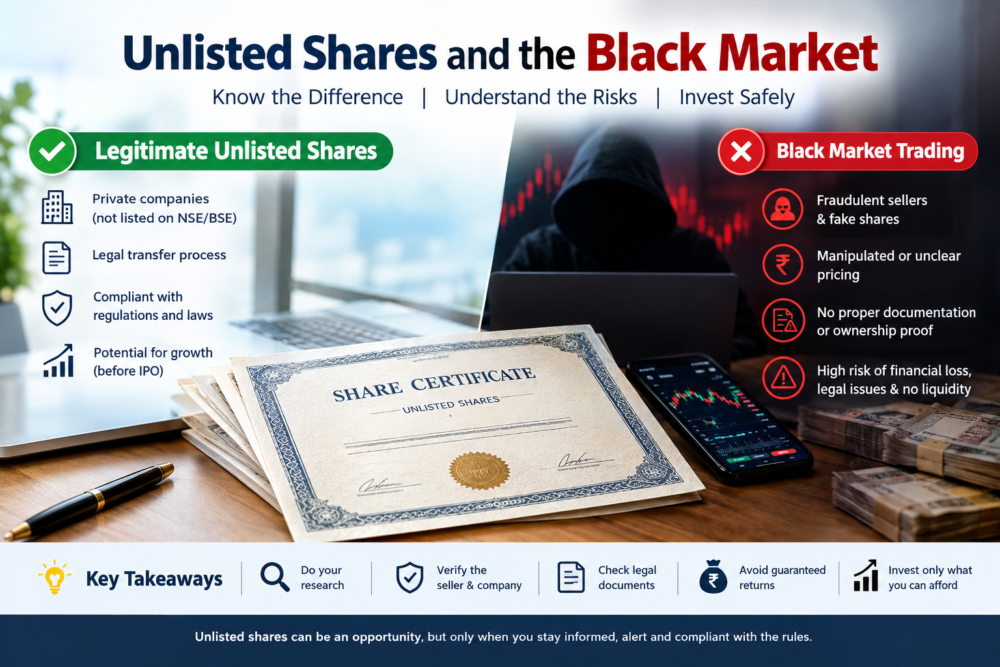
The Indian investment market offers several opportunities beyond traditional stock exchanges. One area that attracts growing interest is unlisted shares, particularly shares of companies that may be considering an Initial Public Offering (IPO). However, investors should understand the difference between legitimate unlisted share transactions and suspicious or potentially illegal trading practices.
In this guide, we explain what unlisted shares are, how the market works, the risks of black market trading, and how investors can protect themselves.tradecol
What Are Unlisted Shares?
Unlisted shares are shares of companies that are not listed for trading on recognized stock exchanges such as the National Stock Exchange (NSE) or the Bombay Stock Exchange (BSE).Unlisted Shares and the Black Market in India
These shares may be transferred privately, subject to applicable laws, company rules, and regulatory requirements. Investors may consider unlisted shares to gain exposure to private companies before a potential IPO.Unlisted Shares Exposed: Hidden Risks Every Investor Must Know
However, an IPO is never guaranteed, and the value of unlisted shares can rise or fall significantly.
Unlisted Shares in India: Risks, Red Flags & Safe Investing
The term “black market” is commonly used to describe suspicious, deceptive, or illegal transactions conducted outside applicable legal and regulatory requirements.
In the unlisted share market, some investors encounter brokers or intermediaries who offer shares at unclear prices, promise guaranteed IPO listings, or fail to provide adequate transaction documentation.
It is important to understand that not every private transaction involving unlisted shares is illegal. The legality depends on the transaction structure, the parties involved, and compliance with applicable requirements.
How Does Unlisted Share Trading Work?
A legitimate unlisted share transaction generally requires investors to verify the company’s identity, the seller’s ownership, the applicable transfer restrictions, and the documentation needed to complete the transfer.
Investors should also understand the quoted price, transaction costs, potential tax implications, and the process for selling their shares in the future.
Unlike exchange-listed shares, unlisted shares may have limited liquidity. This means an investor might not find a buyer quickly or receive the expected selling price.
Major Risks of Black Market Share Trading Learn it
1. Fraud and Fake Share Offers
Fraudsters may advertise shares they do not own or provide misleading information about a company’s financial position.
2. Unclear or Manipulated Pricing
Unlisted shares do not necessarily have a transparent, continuously available market price. Different intermediaries may quote different prices, making independent verification important.
3. False IPO Promises
No intermediary can guarantee that a company will launch an IPO or that its shares will generate profits after listing.
4. Liquidity Problems
Investors may struggle to sell their holdings when they need money, particularly when there are few interested buyers.
5. Legal and Tax Complications
Transactions that fail to comply with applicable regulations, transfer requirements, or tax obligations can create financial and legal difficulties.
How to Protect Yourself When Buying Unlisted Shares
Before making an investment, consider the following precautions:
- Verify the company’s identity and financial information using reliable sources.
- Check the seller’s ownership and the legal transfer process.
- Review the company’s articles of association and applicable share-transfer restrictions.
- Obtain proper transaction documentation and verify the final credit of shares.
- Avoid guaranteed-return claims and pressure to transfer money immediately.
- Understand the potential tax implications and consult a qualified professional when necessary.
- Invest only an amount you can afford to keep invested for an uncertain period.
Is Investing in Unlisted Shares Legal in India?
Unlisted shares can be transferred legally in India when the transaction complies with applicable company law, securities regulations, company-specific restrictions, and other relevant requirements.
However, the legality of a particular transaction depends on its circumstances. Investors should not assume that every broker, online platform, or private offer is authorized simply because it advertises unlisted shares.
Consult official regulatory information and a qualified financial or legal professional if you are uncertain about a transaction.