Introduction
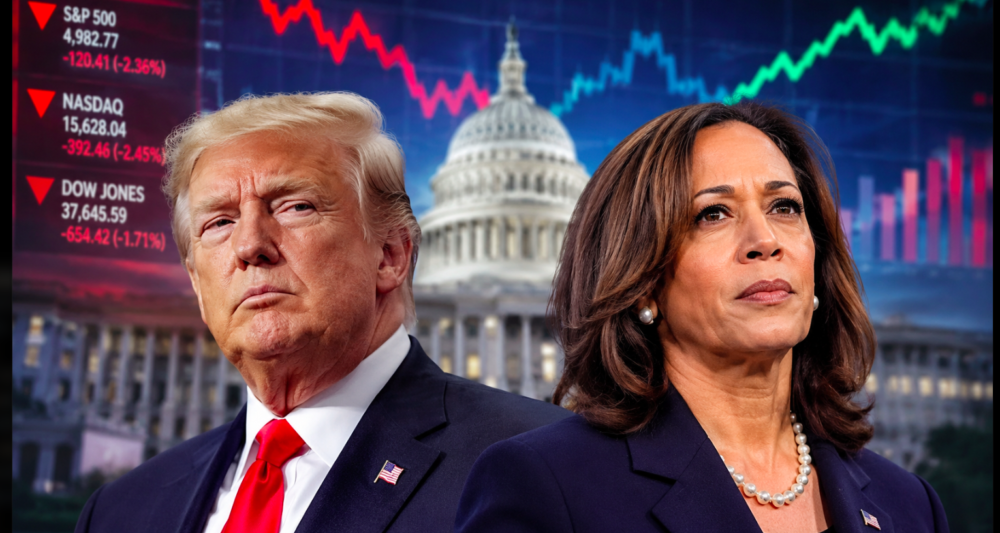
What happens when a political leader who has reshaped global trade, financial expectations, and investor sentiment suddenly loses an election?
Imagine a future US presidential election in which the Democratic Party defeats Donald Trump’s political movement and returns to the White House. The result could trigger a major reassessment of American economic policy, international trade relationships, energy markets, and financial regulation.
But the most interesting question is not whether markets would rise or fall.
The real question is: Which financial assets could lose value, which could benefit, and which investors might be caught on the wrong side of the political transition?
This hypothetical scenario offers a fascinating opportunity to understand how political change can reshape global financial markets.
Scenario 1: The Trump Trade Begins to Unwind
Investors who previously positioned themselves around expectations of tax reductions, deregulation, and protectionist trade policies might reconsider their investments.
If a Democratic administration signals a different economic direction, some companies benefiting from Trump’s policy agenda could face valuation pressure.
Potentially vulnerable areas could include:
- Certain fossil-fuel companies
- Businesses dependent on specific tax incentives
- Companies benefiting from reduced regulatory oversight
- Firms exposed to changes in trade protection policies
However, the impact would depend on the Democratic administration’s actual policies rather than simply its election victory.
Scenario 2: Bitcoin Faces a Political Repricing
One of the most fascinating possibilities involves cryptocurrency.
If markets perceive a Democratic administration as less supportive of the crypto industry, investors could reassess expectations for regulatory clarity, institutional participation, and future adoption.
Bitcoin and crypto-related equities could experience volatility if political expectations change suddenly.
Yet Bitcoin is not controlled by any single government. Its long-term price depends on global liquidity, institutional demand, network adoption, and investor sentiment.
A political transition could therefore produce a temporary repricing without necessarily changing Bitcoin’s long-term fundamentals.
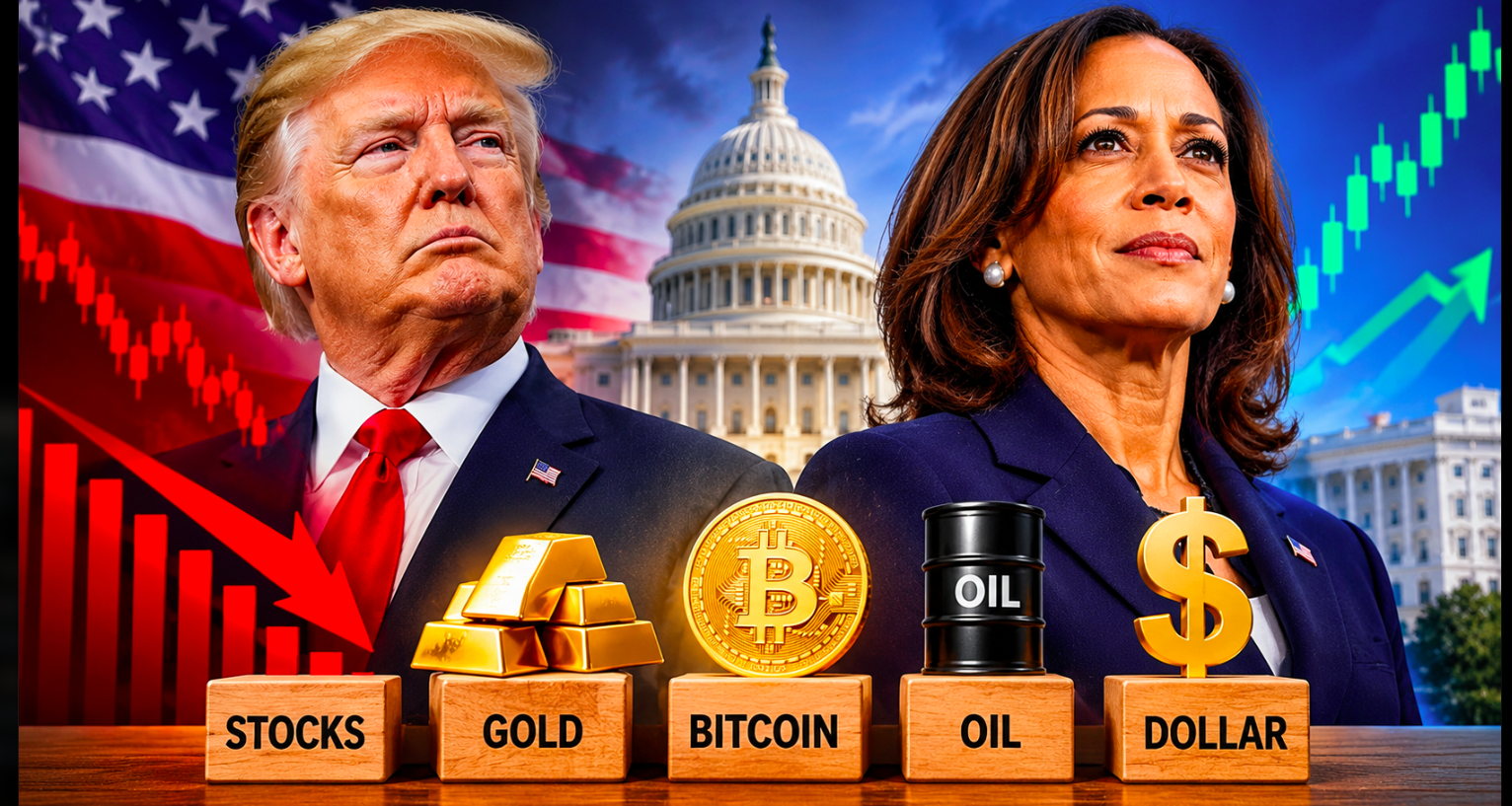
Scenario 3: Gold Becomes the Political Uncertainty Trade
A sudden political transition could increase uncertainty surrounding fiscal policy, international trade, and geopolitical relationships.
Under such circumstances, gold might attract investors seeking portfolio diversification and protection against uncertainty.
But gold’s performance would depend on real interest rates, the dollar, inflation expectations, and the broader economic environment.
A Democratic victory would not automatically guarantee a gold rally.
Scenario 4: Renewable Energy Emerges as a Potential Winner
A Democratic administration could prioritize clean energy, renewable infrastructure, electric vehicles, and environmental policies differently from a Trump administration.
If investors expect stronger support for renewable-energy incentives, solar, wind, battery, and electric-vehicle companies could benefit from improved expectations.
Conversely, some traditional energy businesses might face uncertainty regarding future regulation.
The biggest opportunity could emerge in companies positioned to benefit from long-term energy infrastructure investment.
Scenario 5: What Happens to Indian Investors?
The consequences of a US political transition would not stop at Wall Street.
Indian investors could experience changes through:
- Foreign institutional investment flows
- US dollar and Indian rupee movements
- Global technology spending
- Oil prices
- International trade agreements
- Global investor appetite for emerging markets
Indian IT companies could benefit if improved US economic confidence increases technology spending.
Alternatively, companies dependent on particular trade arrangements could face uncertainty during policy negotiations.
The Indian stock market’s reaction would ultimately depend on domestic earnings, valuations, capital flows, and global economic conditions.
The Biggest Market Risk: Investors Who Bet on One Political Outcome
The most dangerous assumption investors can make is believing that one election result determines the future direction of financial markets.
Markets are influenced by expectations, and those expectations frequently change before political events occur.
If investors already anticipate a Democratic victory, asset prices may adjust well before election day.
This creates a classic financial market phenomenon: buying the rumor and selling the news.
The actual market reaction may therefore be very different from what headlines suggest.
Conclusion
A hypothetical Democratic victory against Trump’s political movement could create a significant reassessment of global financial assets.
Certain sectors might benefit from renewed policy support, while businesses closely associated with existing political priorities could face uncertainty.
For investors, the real lesson is that political transitions create both opportunities and risks.
Understanding how policy expectations influence asset valuations is more valuable than simply predicting which political party will win.
In financial markets, the biggest shock is often not the election result itself—but the difference between what investors expected and what actually happens.
Disclaimer: This article presents hypothetical scenarios for educational purposes. It does not predict an election outcome or constitute investment advice.