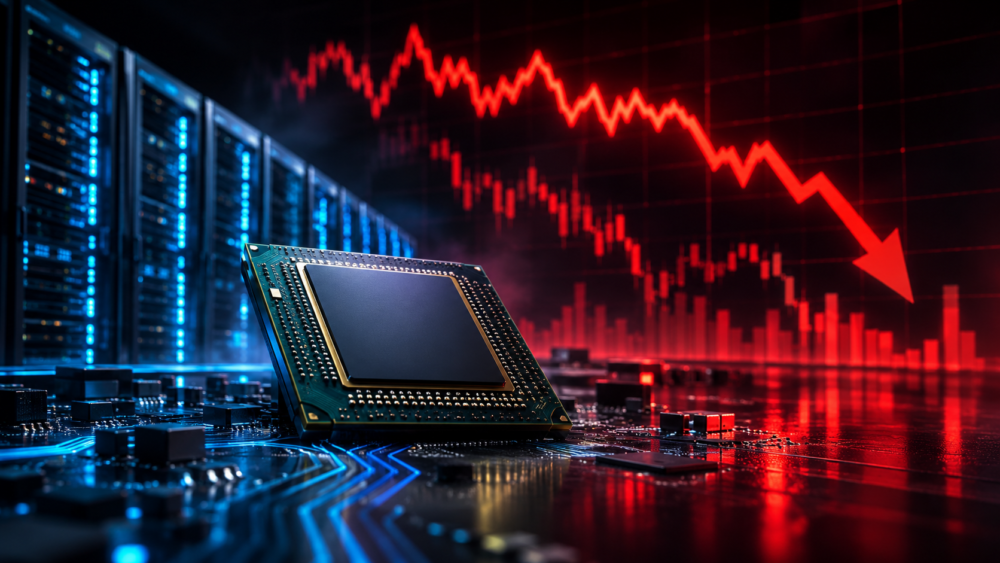
The artificial intelligence revolution has transformed the technology industry, but could its biggest success story be entering a period of uncertainty?NVIDIA Under Pressure: Is the AI Revolution Heading Towards End?
NVIDIA has become one of the most influential companies in the global technology industry. Its powerful GPUs are driving AI chatbots, autonomous systems, cloud computing and next-generation data centres.NVIDIA Under Pressure: Is the AI Revolution Heading Towards End?
However, November 2026 has brought fresh challenges for the AI giant.
Investors are becoming increasingly concerned about the enormous cost of AI infrastructure, the future profitability of artificial intelligence and growing regulatory uncertainty.NVIDIA Under Pressure: Is the AI Revolution Heading Towards End?
Recent market turbulence has also put semiconductor companies under pressure. NVIDIA is facing additional scrutiny following reports concerning CEO Jensen Huang and an investigation into alleged foreign intelligence targeting.
1. The AI Gold Rush Is Facing a Reality Check
For years, companies have invested billions of dollars in artificial intelligence. Technology giants are building massive data centres and purchasing advanced GPUs to develop increasingly powerful AI systems.
But investors are now asking an important question:
When will these massive AI investments generate sustainable profits?
Building AI infrastructure requires enormous amounts of money, electricity, cooling systems and advanced hardware.
If AI revenue fails to match investment expectations, technology companies could face financial pressure.
2. Why Is NVIDIA Facing Pressure?
NVIDIA’s business is closely connected to the global demand for AI computing.
Several challenges deserve attention:
- Growing scrutiny of AI infrastructure spending.
- Uncertainty surrounding international chip exports.
- Increasing competition in the AI semiconductor market.
- Questions about the profitability of AI investments.
- Corporate governance and leadership concerns following recent reports.
These issues do not necessarily mean NVIDIA’s business is collapsing, but they create uncertainty for investors.
3. Could the AI Boom Turn Into a Market Bloodbath?
The term AI bloodbath describes the possibility of a major sell-off in AI-related stocks.
If investors lose confidence in the financial returns of AI investments, semiconductor and technology companies could experience significant valuation declines.
However, a stock market correction and the collapse of an entire industry are two very different things.
Artificial intelligence continues to have applications across healthcare, finance, education, cybersecurity and automation.
4. The Hidden Cost of Artificial Intelligence
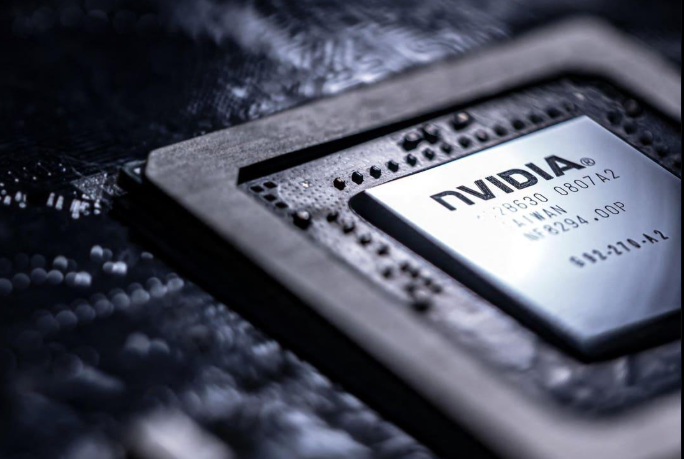
AI is not just about powerful computer chips.
It requires:
- Massive electricity consumption.
- Expensive data centre infrastructure.
- Advanced cooling technology.
- Skilled engineering teams.
- Continuous hardware upgrades.
These costs raise an important question: Is the current pace of AI expansion economically sustainable?
5. What Happens Next for NVIDIA?NVIDIA Under Pressure: Is the AI Revolution Heading Towards End?
NVIDIA’s future will depend on several factors, including continued demand for AI chips, new product innovation, international trade policies and the ability of customers to turn AI investments into revenue.
The coming months could reveal whether the recent market turbulence is simply a temporary correction or a deeper reassessment of the AI industry.
NVIDIA Under Pressure: Is the AI Revolution Heading Towards End?
Probably not. But the industry may be entering a more demanding phase.
The first stage of the AI revolution was about building powerful technology. The next stage will be about proving that this technology can generate sustainable economic value.
NVIDIA remains at the centre of this transformation, but even the biggest technology companies are not immune to market uncertainty.
The biggest question is no longer how powerful AI can become. It is whether the world can afford the price of building it.
Disclaimer: This article is for informational and educational purposes only. It is not investment advice.