Introduction
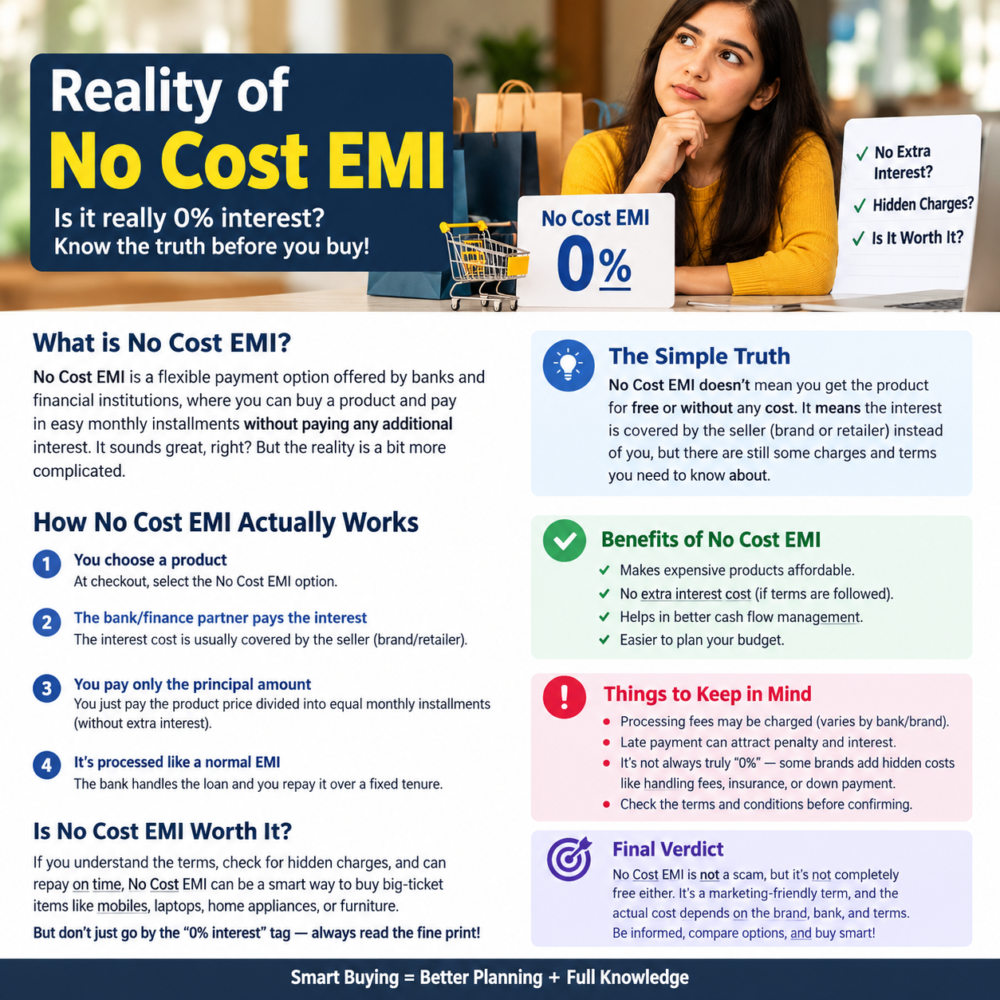
No Cost EMI has become a popular payment option in India for purchasing smartphones, laptops, televisions, home appliances, and other expensive products. It allows customers to divide their payments into monthly instalments instead of paying the entire amount upfront.
Reality of No Cost EMI: Is It Really Interest-Free?
The reality of No Cost EMI is more complicated than its name suggests. Although customers may not pay interest directly in some offers, processing fees, applicable taxes, lost upfront discounts, and other terms can affect the total cost.Reality of No Cost EMI: Is It Really Interest-Free?
In this article, we will explain how No Cost EMI works, its advantages and disadvantages, and what you should check before choosing it.
What Is No Cost EMI?
No Cost EMI is a payment facility that allows customers to purchase products through monthly instalments without an additional interest cost being passed on to them under the advertised offer.
It is generally available through banks, credit card providers, financing companies, and online or offline retailers.Reality of No Cost EMI: Is It Really Interest-Free?
For example, suppose you want to purchase a smartphone worth ₹30,000 and choose a six-month No Cost EMI plan.
- Product price: ₹30,000
- Repayment period: 6 months
- Monthly instalment: ₹5,000
- Total instalments: ₹30,000
This example assumes there are no processing fees, additional taxes, or other charges.
How Does No Cost EMI Actually Work?
No Cost EMI offers typically work through a discount or subsidy arrangement. The seller may provide an upfront discount that offsets the interest charged by the financing provider, or the offer may use another promotional pricing structure.
Here is how the process generally works:
- You select a product and choose the No Cost EMI option.
- The bank or financing provider processes the eligible transaction.
- The interest cost, if applicable, is offset according to the offer’s terms.
- You repay the amount through the scheduled monthly instalments.
- Any processing fees, applicable taxes, or penalties remain subject to the agreement.
Important: The exact arrangement varies by lender, retailer, product, and promotional offer.tradecol
What Is the Reality of No Cost EMI?
1. No Cost EMI Does Not Always Mean Zero Extra Cost
The term “No Cost EMI” primarily describes the advertised interest offer. It does not automatically guarantee that every expense associated with the transaction is zero.Reality of No Cost EMI: Is It Really Interest-Free?
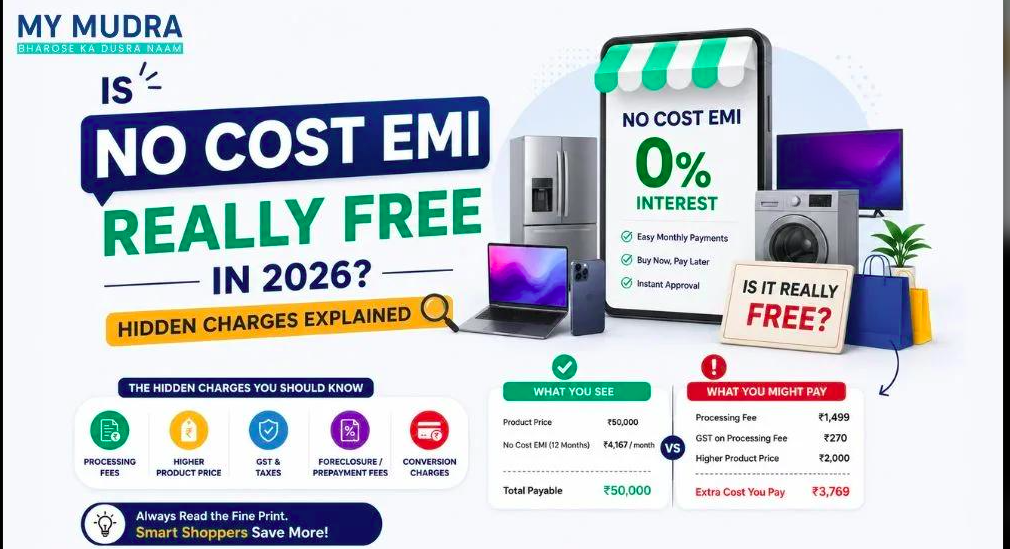
Processing fees, applicable taxes, and late-payment penalties may increase the amount you pay.
2. You May Lose an Upfront Discount
Sometimes, a retailer offers a lower price to customers who pay in full but a different price to customers who choose EMI.
For example:
- Cash purchase price: ₹28,000
- No Cost EMI purchase price: ₹30,000
In this hypothetical example, choosing EMI costs ₹2,000 more before considering any additional fees.
Always compare the final payable amount rather than focusing only on the monthly instalment.
3. Processing Fees and Taxes May Apply
Some lenders charge a processing fee for EMI transactions. Depending on the transaction structure and applicable rules, taxes may also apply to certain charges.
Read the lender’s terms carefully and confirm the complete amount payable before accepting the offer.
4. Late Payments Can Be Expensive
Missing an EMI payment can result in late fees, additional interest where applicable, and potential negative effects on your credit history.
Choose a repayment amount that comfortably fits your monthly budget.
5. Easy Instalments Can Encourage Overspending
A product may seem affordable when its price is divided into small monthly payments. However, multiple EMI commitments can add up quickly.
Before buying, consider whether the product is necessary and whether you can afford the instalments without compromising essential expenses or savings.
Advantages of No Cost EMI
- Improved cash flow: You do not need to pay the entire purchase price immediately.
- Budget flexibility: You can distribute eligible purchases across several months.
- Potential interest savings: A genuine promotional offer can offset the interest cost.
- Convenience: Eligible purchases may be financed through a straightforward checkout process.
- Access to expensive products: Instalments can make larger purchases easier to plan.
Disadvantages of No Cost EMI
- Processing fees may apply.
- The EMI price may be higher than the cash purchase price.
- Some promotional discounts may not be available.
- Late payments can lead to penalties.
- Multiple EMIs can put pressure on your monthly budget.
- Eligibility, repayment terms, and available offers vary between providers.
Is No Cost EMI Worth It?
No Cost EMI can be worth considering when the final payable amount is competitive, the charges are transparent, and the instalments fit comfortably within your budget.
It may be less attractive when paying upfront earns you a substantial discount or when fees make the EMI option more expensive.
Before making a decision, compare the cash price, total EMI payments, processing fees, applicable taxes, and any lost discounts.
Checklist Before Choosing No Cost EMI
- Compare the cash price with the EMI purchase price.
- Check the processing fee and applicable taxes.
- Confirm the total repayment amount.
- Read the lender’s terms and conditions.
- Check whether you will lose any upfront discount.
- Make sure you can pay every instalment on time.