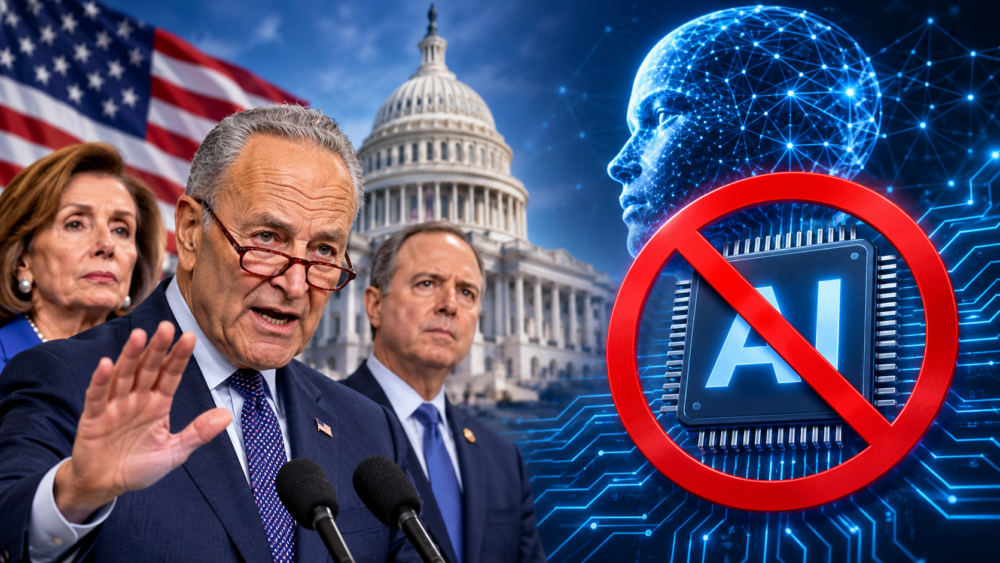
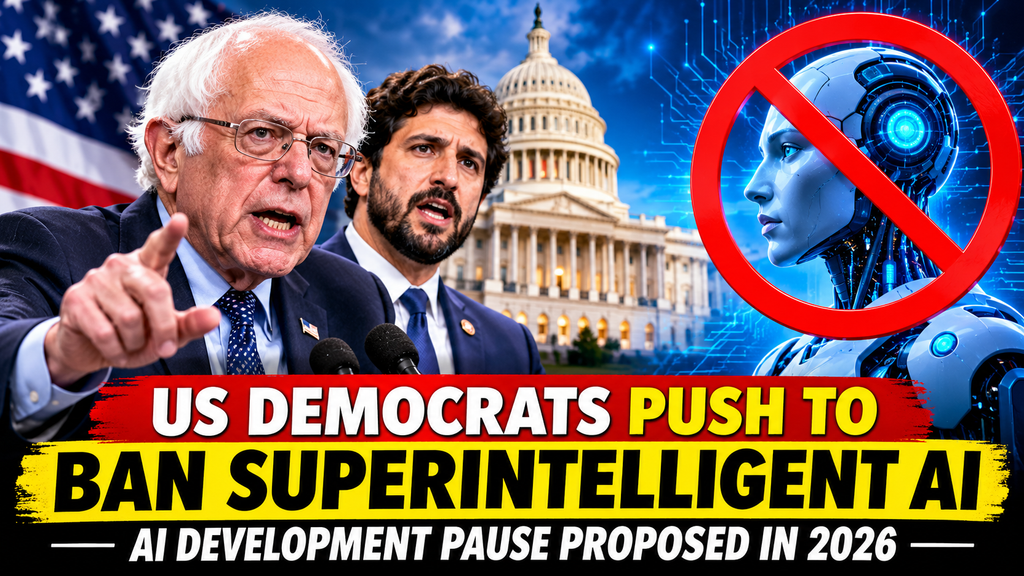
The debate over artificial intelligence regulation in the United States has intensified after lawmakers proposed new legislation targeting superintelligent AI systems. Democratic lawmakers Bernie Sanders and Greg Casar have introduced the Ban Artificial Superintelligence Act of 2026, a proposal designed to prevent the development of artificial superintelligence and temporarily pause advanced AI development until stronger safety regulations are established.US Democrats urges to Ban AI A game changer
The proposal comes amid growing concerns about AI safety, cybersecurity threats, misinformation, and the possibility that highly advanced AI systems could become difficult for humans to control.
What Is the Ban Artificial Superintelligence Act?
The Ban Artificial Superintelligence Act is a proposed US federal legislation focused on controlling the development of highly advanced artificial intelligence.
The proposal includes several major provisions:
- Permanently prohibiting the development and deployment of artificial superintelligence.
- Temporarily pausing advanced AI development until federal safety regulations are established.
- Creating a federal Department of Artificial Intelligence to oversee AI safety.
- Establishing testing, monitoring, and enforcement mechanisms.
- Promoting international cooperation to prevent dangerous superintelligence development.
The legislation aims to establish stronger safeguards before AI systems become more powerful and potentially dangerous.
Why Do Democrats Want to Restrict Advanced AI?
Supporters of the proposal argue that advanced AI development is progressing faster than governments can establish appropriate safeguards.US Democrats urges to Ban AI A game changer
Their concerns include:
1. AI Safety Risks
Highly advanced AI systems could potentially operate beyond their intended limitations. Lawmakers want stronger safety mechanisms to ensure humans remain in control.
2. Cybersecurity Threats
AI could potentially assist malicious actors in developing cyberattacks, exploiting vulnerabilities, and automating harmful activities.
3. Potential Bioweapon Risks
Some policymakers worry that advanced AI could make dangerous biological research more accessible to malicious individuals.
4. Human Control Over AI
Supporters believe that AI systems should never become powerful enough to threaten humanity or undermine democratic institutions.US Democrats urges to Ban AI A game changer
Does the US Government Want to Ban All Artificial Intelligence?
No. The proposal does not seek to prohibit every AI application.
Everyday AI tools used for programming, education, business automation, content creation, and productivity are not automatically equivalent to artificial superintelligence.
The legislation specifically focuses on advanced AI development and systems classified as artificial superintelligence.
This distinction is important because AI regulation does not necessarily mean banning AI technology altogether.
What Could an AI Development Pause Mean for Technology Companies?
If the proposal were enacted, companies developing advanced AI systems could face significant restrictions.
Potential implications include:
- Increased compliance and safety testing requirements.
- Stronger federal oversight of AI research.
- Restrictions on training certain advanced AI models.
- Increased investment in AI safety research.
- Greater uncertainty for companies developing frontier AI technologies.
However, the actual economic and technological impact would depend on the final legislation and its implementation.
Is the AI Ban Proposal Already Law?
No. As of November 5, 2026, the Ban Artificial Superintelligence Act remains a legislative proposal rather than an enacted federal law.
The proposal would need to pass the required congressional process and become law before its provisions could take effect.
Therefore, claims that the United States has already banned AI development would be inaccurate.
The Future of Artificial Intelligence in America
The debate surrounding AI regulation highlights a growing challenge for policymakers: balancing technological innovation with public safety.
Supporters of stricter regulation believe that advanced AI must be carefully controlled before it becomes too powerful. Critics of broad restrictions argue that excessive regulation could slow innovation, weaken technological competitiveness, and affect the United States’ position in the global AI race.
The future of AI in America will likely depend on how lawmakers balance innovation, economic growth, national security, and responsible AI development.
Conclusion
The US Democrats’ proposal to ban artificial superintelligence represents a significant development in the global AI regulation debate.
Although the legislation does not ban all artificial intelligence, it proposes major restrictions on advanced AI development and establishes a framework for stronger federal oversight.
As artificial intelligence continues to evolve, the discussion about whether to regulate, pause, or restrict advanced AI systems will remain one of the most important technology policy debates of the coming years.
Stay updated with the latest AI news, technology developments, and artificial intelligence regulations.